
Top 5 Nigerian News Stories (Last Week)
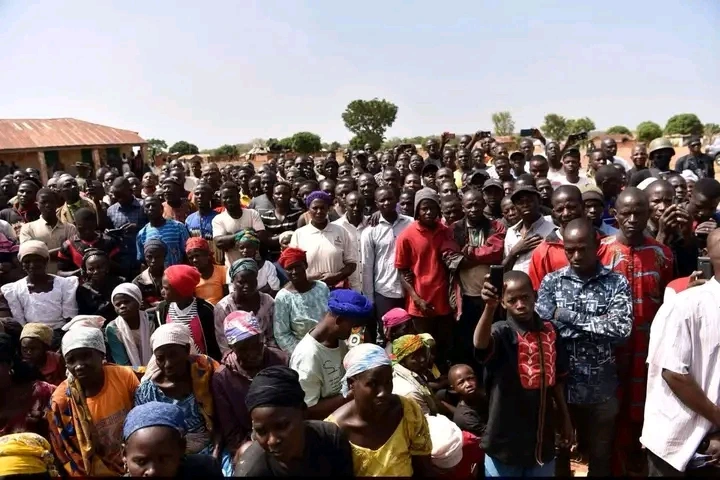
1) Mass Abductions at Churches in Kaduna State Shock the Nation
In one of the week’s most disturbing security developments, over 150 worshippers were abducted during coordinated attacks on three churches in Kurmin Wali, a community in Kaduna State on Sunday. Armed men stormed congregations at Evangelical Church Winning All (ECWA), Cherubim and Seraphim, and Catholic churches during services, seizing parishioners in what local officials described as a highly organized operation. Initial reports indicated at least 177 people were missing following the attacks, though some have since escaped or been found, leaving many still unaccounted for. The incident has reignited deep concerns about the ability of the state to protect religious sites and civilian populations, especially in rural and hard-to-reach regions of northwest Nigeria.
The scale and coordination of the abductions raise questions about intelligence failures and the growing boldness of armed groups operating amid the wider insecurity plaguing northern Nigeria. Government and security sources have yet to confirm which group is responsible, though such attacks have become increasingly common and are often attributed to criminal gangs or Islamist militants seeking ransom or political leverage. Families of the missing have appealed for urgent rescue efforts as pressure mounts on authorities to secure their safe release and restore confidence among Nigerians troubled by persistent violence.
Source: Associated Press / Reuters consensus reporting

2) UN Warns 35 Million Nigerians Risk Hunger After Aid Funding Collapse
The United Nations has issued a stark warning that nearly 35 million Nigerians are at risk of acute hunger in 2026 as global aid funding dries up, with roughly 3 million children facing severe malnutrition. At the launch of the international humanitarian response plan in Abuja, UN Resident and Humanitarian Coordinator Mohamed Malick Fall detailed how the collapse of foreign aid budgets has drastically limited the UN’s capacity to provide life-saving support.
According to officials, aid programs that once targeted millions now have funding for only about 2.5 million Nigerians — down sharply from 3.6 million in 2025, and far below needs across conflict-affected states such as Borno, Adamawa, and Yobe. The northeast has been particularly hard-hit by escalating violence, suicide bombings, and displacement, compounding food insecurity that already placed enormous strain on households.
The funding shortfall highlights deeper structural challenges in Nigeria’s humanitarian response framework, raising calls for urgent domestic policy action and increased donor engagement. Government representatives acknowledged the severity of the situation and stressed efforts to scale up local agricultural production and emergency preparedness ahead of the lean season.
Source: Reuters

3) Nigerian Troops Rescue 62 Hostages, Kill Militants in Northwest Operations
In a significant show of force against criminal networks, Nigerian military operations in the northwest have successfully freed 62 hostages from armed captors and killed at least two militants believed to be involved in widespread kidnappings. The hostages were reportedly held in forested hideouts in Zamfara State, a region long plagued by banditry, where rescue teams executed a coordinated assault to liberate the captives.
Separately, Nigerian troops ambushed and killed two members of the Lakurawa militant group near the border between Kebbi and Sokoto states following actionable intelligence. The military described these actions as part of an intensified campaign to dismantle dangerous criminal and extremist cells responsible for kidnappings, cattle rustling, and attacks on communities throughout the northwest.
These successes follow the high-profile mass abduction in Kaduna State earlier in the week, underscoring the urgency of the security threat and the federal government’s focus on neutralizing it. Security analysts say that while such operations signal capability, sustained progress will require broader governance reforms and better community engagement alongside military pressure.
Source: Reuters

4) Ambush in Zamfara Kills Soldiers and Police Officer, Highlighting Ongoing Violence
An ambush by suspected militants in Zamfara State on Thursday resulted in the deaths of five Nigerian soldiers and one police officer, illustrating the resilient threat posed by armed groups in the northwest. The surprise attack took place as troops responded to militant activity, prompting heavy exchanges of fire that left security personnel dead despite their efforts to protect local communities.
The incident occurred amid multiple security operations in the region, including recent successes in rescuing hostages and disrupting criminal gangs. Zamfara, along with neighbouring states, has been a hotbed of banditry and insurgent activity, with armed groups demonstrating sophisticated tactics that challenge conventional military responses.
The Federal Army emphasized its commitment to the ongoing campaign against those who terrorize civilians, while local leaders lamented the toll on families and communities already grappling with displacement and fear from recurrent violence. Analysts note that the complex blend of criminality and ideological extremism in these regions complicates the national security outlook and demands a comprehensive governmental strategy.
Source: Associated Press

5) Broader Security Efforts Continue Across Northern Nigeria
Beyond specific rescue and counter-militant operations, the Nigerian military has expanded its campaign across key northern regions in a bid to weaken armed groups responsible for kidnappings, banditry, and insurgency. These efforts include aerial surveillance, targeted strikes on militant strongholds, and enhanced coordination with state and local security forces aimed at restoring stability in areas long affected by violence.
While detailed operational specifics vary by theatre, the overarching objective remains consistent: to degrade the capability of groups that exploit porous terrains and vulnerable communities while expanding criminal influence. Successes such as the freeing of hostages in Zamfara and the killing of militants in Kebbi reflect tactical gains, but recurring attacks and ambushes — like the recent deadly assault on security forces — reveal deep challenges that persist.
The government’s strategy increasingly combines military pressure with promises of socio-economic interventions, though critics argue that long-term peace will require political reconciliation efforts and investment in local development to address root causes of insecurity.
Source: Reuters / aggregated security reporting
Top 5 World News Stories (Last Week)

1) Tensions Soar as U.S. Threatens Iran Amid Middle East Military Buildup
Last week saw a dramatic escalation in U.S.–Iran tensions as U.S. President Donald Trump said a powerful naval “armada” was moving toward Iran amid warnings that Tehran’s crackdown on protests and nuclear ambitions could provoke military confrontation. The fleet — including the aircraft carrier USS Abraham Lincoln and guided-missile destroyers — is expected in the Middle East as U.S. officials stated that additional air-defense assets might be deployed to guard bases against potential strikes. Trump said he hoped to avoid conflict but underscored the readiness of U.S. forces to respond to any hostile actions.
Iran’s senior officials reacted defiantly, declaring any attack “an all-out war” against the country, heightening fears that a misstep could ignite a broader regional conflict. The situation remains volatile as both sides position militarily while diplomatic channels are strained.
Source: Reuters

2) World Economic Forum 2026 in Davos Highlights Global Fractures and Diplomacy
The 56th World Economic Forum (WEF) convened in Davos, Switzerland from January 19–23, bringing together heads of state, business leaders, economists, and civil society representatives at a time of heightened geopolitical tension. The annual meeting focused on global policy priorities including economic development, climate resilience, technological innovation, and international cooperation.
Leaders addressed issues such as trade disputes, geopolitical rivalries, and efforts to promote sustainable growth in an uncertain global environment. Discussions also centred on the role of AI and digital transformation in shaping future economies. U.S. President Donald Trump’s presence and policy positions — especially regarding trade and security — framed many debates, underscoring shifting global alignments as nations navigate economic headwinds and strategic competition.
Source: Reuters / Wikipedia overview

3) EU–U.S. Rift Deepens Over Greenland and Trade Tariffs
Relations between the United States and European Union drew intense global attention as President Trump linked his ambition to consolidate influence over Greenland to perceived diplomatic slights, including not winning a Nobel Peace Prize, and threatened trade tariffs in response to resistance from NATO allies. European leaders warned that coercive tactics risk destabilizing longstanding alliances, considering counter-measures such as tariffs against American goods worth billions.
The dispute highlighted broader strains within transatlantic ties, with markets reacting to uncertainty as investors weighed risks from potential trade restrictions and diplomatic fallout. Discussions on economic sanctions and responses underscored the fragility of alliances built during the post-World War II era in the face of modern geopolitical assertiveness.
Source: Reuters / AP News summaries

4) Severe Flooding in Mozambique Forces Mass Displacement
Flooding triggered by extreme rains in Mozambique forced thousands of residents to flee as waters surged across large swathes of the country, leaving communities stranded and prompting emergency response efforts. Aid agencies described dire conditions as families sought safety on rooftops and higher ground amid rising levels, while helicopters and ground teams assisted in rescues.
The extreme weather event is part of a broader pattern of climate-linked disasters affecting Southern Africa, underscoring vulnerabilities to climate change, particularly for infrastructure-poor and low-lying regions. Authorities continue to assess the full scope of impact as international support arrives to help with relief operations.
Source: Reuters

5) Chile Wildfires Kill Nearly 20 and Trigger Mass Evacuations
In South America, intense wildfires driven by a heatwave devastated regions in Chile, killing at least 19 people and forcing the evacuation of hundreds of residents as flames swept through homes and forests. Firefighters battled dozens of active blazes under extreme conditions, as winds and high temperatures accelerated the spread of fires that destroyed property and strained emergency resources.
The wildfires — among the worst in Chile’s recent history — spotlight the increasing severity of climate-induced natural disasters globally. Officials called for support from neighboring countries and international partners to contain the emergencies and provide relief to affected families.
Source: Reuters