
Top 5 Nigerian News Stories (Last Week)
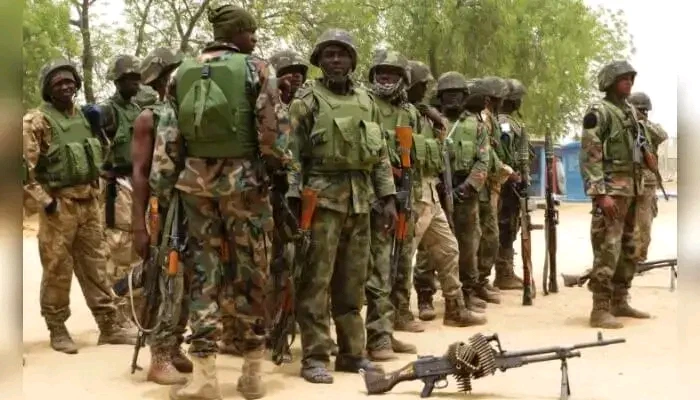
1. Nigerian Army Kills Boko Haram Commander in Major Raid
In a significant security operation, the Nigerian Army announced the killing of Abu Khalid, a senior Boko Haram commander, along with 10 other militants in the Kodunga area of Borno State. Abu Khalid was reportedly integral to coordinating logistics and operations for Boko Haram and its affiliates. The raid also recovered weapons, food supplies, and medical equipment, signaling the military’s intensified push against insurgent networks. This operation comes amid a worsening security landscape that includes increased kidnappings, cross-border militant activities, and recent U.S. airstrikes targeting Islamic State elements in northern Nigeria. Analysts suggest that strengthened intelligence cooperation, including U.S. surveillance, has been instrumental in recent successes, though the overall threat from Boko Haram and ISWAP remains persistent.
Source: AP News

2. Deadly Extremist Attacks Kill Dozens in Northeastern Nigeria
Earlier this week, armed extremists carried out deadly attacks in Borno State, killing at least 25 construction workers and 11 military personnel and civilians in separate ambushes. The assaults targeted a construction site and a military base in Sabon Gari, with militants reportedly using armed drones in one of the strikes. While authorities have not conclusively identified the group behind the attacks, Boko Haram and the Islamic State West Africa Province (ISWAP) remain active in the region. The incidents underscore the ongoing insurgency crisis, which has resulted in tens of thousands of deaths and millions displaced over more than a decade.
Source: AP News

3. Nigerian Military Officers to Be Tried for Alleged Coup Plot
Nigeria’s Defense Headquarters confirmed that several military officers will be tried before a military panel over allegations they plotted to overthrow President Bola Tinubu’s government. The move follows the arrest of at least 16 officers in October, accused of indiscipline and violating service regulations connected to the alleged coup plan. Identities and precise charges remain confidential, but the development highlights lingering concerns around military cohesion and democratic stability. Analysts note that recent coups in neighboring West African nations may be influencing unrest within Nigerian ranks, even as the government moves to reinforce internal discipline.
Source: AP News / FT

4. Nigeria and Turkey Seek to Boost Trade to $5 Billion
In a key diplomatic and economic development, **Turkey announced plans to expand trade with Nigeria from about $2 billion to $5 billion. Presidents Recep Tayyip Erdoğan and Bola Tinubu discussed enhanced cooperation on defense, infrastructure, joint efforts against insurgency, and increased investment. The agreements signed include defense cooperation and initiatives aimed at strengthening military training and industrial collaboration. Nigerian officials emphasize that deeper foreign partnerships are part of a broader strategy to attract investment and improve security conditions at home.
Source: Reuters

5. Popular Nigerian Singer Ifunanya Nwangene Dies from Snake Bite
Tragedy struck the Nigerian entertainment community as Ifunanya Nwangene, a 26-year-old singer and former The Voice Nigeria contestant, died after being bitten by a snake while asleep in her Abuja home. Nwangene, who was preparing for her first solo concert, reportedly sought care at a local clinic that lacked antivenom before being transferred to a federal medical facility where she passed away. Colleagues, fans, and fellow artists paid tribute, describing her as a rising star whose loss is deeply felt.
Source: People.com
Top 5 World News Stories (Last Week)

1. World Economic Forum (Davos 2026) and Global Tensions
The 56th World Economic Forum convened in Davos, Switzerland from Jan 19–23, bringing together global leaders amid heightened geopolitical tensions. A central focus was the widening rift over U.S. foreign policies, particularly actions involving NATO allies and the Greenland dispute. Debate encompassed economic cooperation, geopolitical stability, and global growth strategies. Key discussions included calls for multilateralism, innovation deployment, and planetary prosperity. Notably, Iran’s foreign minister was disinvited amid domestic unrest, while Israeli Prime Minister Bennett stayed away due to legal concerns tied to international courts. Davos served as a microcosm of emerging global divisions even as economic leaders sought pathways to collaboration.
Source: Wikipedia / Independent reports

2. Severe U.S. Winter Storm Impacts East Coast
The January 30–February 1, 2026 winter storm hit the U.S. East Coast with heavy snowfall — up to 22.5 inches in parts of North Carolina — and hurricane-force winds. The storm, rapidly intensifying into a bomb cyclone, led to multiple states of emergency across the Southeast and mid-Atlantic, significant travel disruptions, coastal flooding, and at least four fatalities. Snow, wind, and power outages challenged emergency response efforts. This extreme weather event underscores the vulnerability of critical infrastructure and emergency systems when facing severe climate-driven phenomena this winter.
Source: Wikipedia winter storm entry

3. Record Heat in Australia Amid Political and Climate Stress
Australia experienced its fourth-hottest January on record, with temperatures significantly above long-term averages. The heat exacerbated bushfire hazards and produced smoky conditions in major cities like Sydney. Alongside climate extremes, political uncertainty grew as key leaders opted not to pursue leadership roles, stirring speculation about future government alignment. Domestic policy debates — from drug-checking trials to sentencing reforms — continued amid concerns about corporate price gouging and housing costs. Australia’s climate and political dynamics reflect broader global pressures from climate change and governance challenges.
Source: The Guardian

4. China Pushes for Renminbi as Global Reserve Currency
China’s leadership has publicly advocated for the renminbi to gain global reserve currency status, marking a strategic push to expand its role in international finance. President Xi Jinping’s remarks emphasized building a stronger financial foundation and increasing the currency’s use in global trade. This development comes amid shifting economic conditions, including debates over U.S. monetary policy, concerns about the dollar’s future dominance, and geopolitical recalibrations in global economic governance.
Source: Financial Times

5. IMF Warns on Global Growth Risks Amid Resilience
The International Monetary Fund (IMF) released a global growth outlook, projecting 3.3 % growth for 2026, consistent with the previous year. However, IMF Managing Director Kristalina Georgieva cautioned that the underlying resilience should not be taken for granted, highlighting risks including weakened trade dynamics, political tensions (notably U.S. policy impacts), and the critical importance of strong institutions. Tech investment — especially in AI — remains a major economic driver, but geopolitical uncertainties threaten to destabilize positive momentum if governance structures falter.
Source: Business Insider