
Top 5 Nigerian News Stories (Last Week)
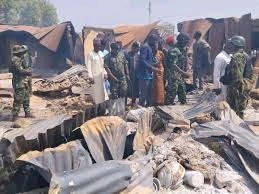
1. Deadly Militant Attacks in Kwara State Kill ~170 — Tinubu Deploys Troops
In one of the deadliest recent assaults in Nigeria’s ongoing security crisis, suspected jihadist fighters stormed remote communities in Woro village, Kwara State, killing at least 170 civilians and destroying homes. Officials say the militants systematically rounded up villagers binding and executing residents before burning homes and looting property. In the accompanying assault in Katsina State, at least 21 more people were killed, deepening fears about the spread of extremist violence beyond northern regions.
President Bola Tinubu responded by deploying an army battalion to the Kaiama district to prevent further attacks and ordered enhanced security operations across vulnerable areas. He condemned the attacks as “cowardly and barbaric” and praised local Muslim leaders who resisted extremist attempts to impose strict Sharia rule. The government denies claims of religious targeting, but militants in parts of Nigeria have increasingly used ideology to exploit local grievances. The brutality of the killings including reports of tied hands and targeted execution triggered mass burials and widespread mourning in Kwara communities.
Source: Reuters

2. Ongoing Security Crisis: Gunmen Kill and Kidnap in Kaduna
In another violent incident highlighting continuing insecurity, armed assailants attacked a village in Kauru Local Government Area, Kaduna State, killing three people including security personnel and abducting 11 others, among them a Catholic priest. This early morning raid reflects growing boldness among militant groups and armed gangs in northwest Nigeria, where both Islamic extremist factions and criminal bandits operate.
Police confirmed the assault and said a gun battle broke out during the attack, resulting in some attackers being killed. Human rights organizations have condemned the federal government’s handling of security, describing the protection provided to citizens as "grossly incompetent," while the Vatican and local religious leaders called for greater efforts to safeguard vulnerable communities.
Source: Reuters

3. Nigeria’s Security Forces Amplify Response to Militant Violence
Following the Kwara attack and other incidents, Nigeria’s military has begun broader operations against jihadist groups expanding their reach into previously more secure regions. Reports indicate that groups like Islamic State West Africa Province (ISWAP) and emergent affiliates are exploiting porous borders and under-governed terrain to extend influence.
President Tinubu’s government is boosting intelligence sharing, reconnaissance flights, and coordinated ground operations, though critics argue Nigeria’s forces remain overstretched and under-resourced against agile militant networks. Local leaders and residents are calling for a national emergency declaration to prioritize security and protective measures for rural communities.
Source: Financial Times

4. Calls for Tough Measures After Highway Sabotage Go Viral
Infrastructure vandalism has stirred intense debate nationwide after a video showed systematic theft of road components from a major federal highway project the Ibadan-Ilesa/Ife federal highway. The President’s Special Adviser on Information suggested vandals should be “shot on sight,” a statement that sparked both support and strong criticism about excessive rhetoric, civil liberties, and public safety.
Meanwhile, separate reports emerged of bandits burning a police station and abduction of residents in Niger State, underlining the continuing threat posed by armed criminal gangs. These events highlight Nigeria’s broader struggle with lawlessness not only from organized militant groups but also opportunistic criminal networks that disrupt infrastructure, security, and community stability.
Source: NaijaNews

5. Historical Terrorism Case: Nine Charged Over 2025 Yelwata Massacre
In a major legal development, Nigerian prosecutors charged nine men with terrorism-related offenses connected to a brutal attack on the Yelwata community (June 2025), one of the deadliest rural massacres in memory. The indictment includes planning, funding, and weapons procurement charges tied to an assault that killed approximately 150 people driven by deep-rooted land, ethnicity, and religion tensions in the Middle Belt.
The government’s case highlights efforts to pursue accountability for past atrocities even as new security challenges arise. Authorities say the defendants conspired across state lines, raising funds and organizing fighters. This legal action comes amid international pressure on Nigeria to bolster protection for citizens after high-profile mass killings and kidnapping campaigns.
Source: Reuters
Top 5 World News Stories (Last Week)

1. Japan’s Prime Minister Set for Major Lower House Victory
In Japan’s recent snap election, Prime Minister Sanae Takaichi’s ruling coalition appeared poised to win a landslide victory in the lower house of Parliament. Early results and exit polls showed strong public support, solidifying her political mandate and paving the way for policies on economic reform, security, and constitutional issues.
Source: Reuters

2. U.S. Pushes for Peace in Ukraine by Summer
Ukrainian President Volodymyr Zelenskiy announced that the United States is pushing for negotiations that could end the Russia-Ukraine war by summer 2026. Talks brokered in Abu Dhabi have led to proposals for further meetings, with Kyiv agreeing to continue discussions in Miami. However, diplomatic challenges remain.
Source: Reuters

3. Bitcoin Surges Past $70,000 After Market Volatility
Global financial markets saw renewed interest this week as Bitcoin climbed above $70,000 after a recent downturn. The rebound came alongside stabilizing technology stocks and precious metals, marking a significant shift in investor sentiment and easing some pressure on risk assets.
Source: Reuters

4. Cryptocurrency Market Turmoil Hits Companies
Although Bitcoin rallied, broader crypto market turbulence dragged down shares of firms heavily invested in Bitcoin and other digital assets. Investors worried the slump could signal deeper strains across financial sectors exposed to digital currency volatility.
Source: Reuters

5. Global Olympic Truce Effort Highlights Worldwide Conflicts
With the 2026 Winter Olympics approaching, the United Nations called for an “Olympic Truce,” symbolically urging an end to hostilities across global conflict zones, including Ukraine, Sudan, and the Middle East. However, no major belligerents have formally agreed, underscoring the depth of ongoing international violence.
Source: Washington Post